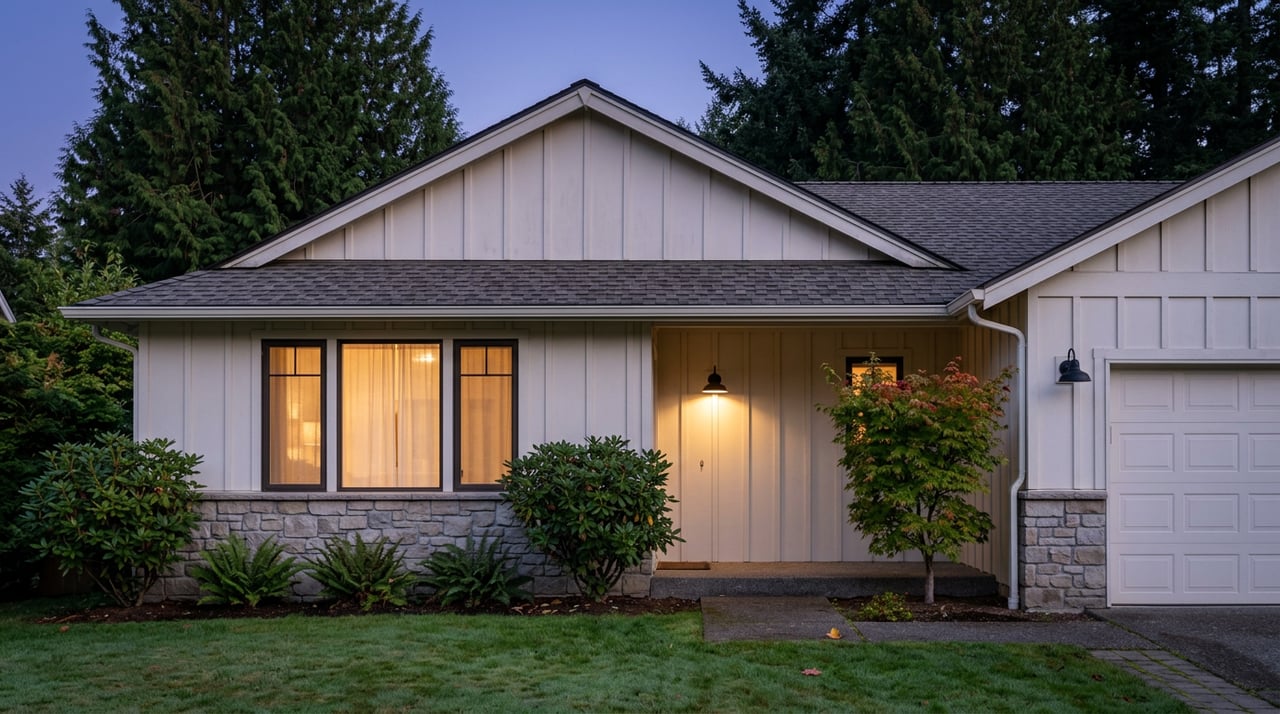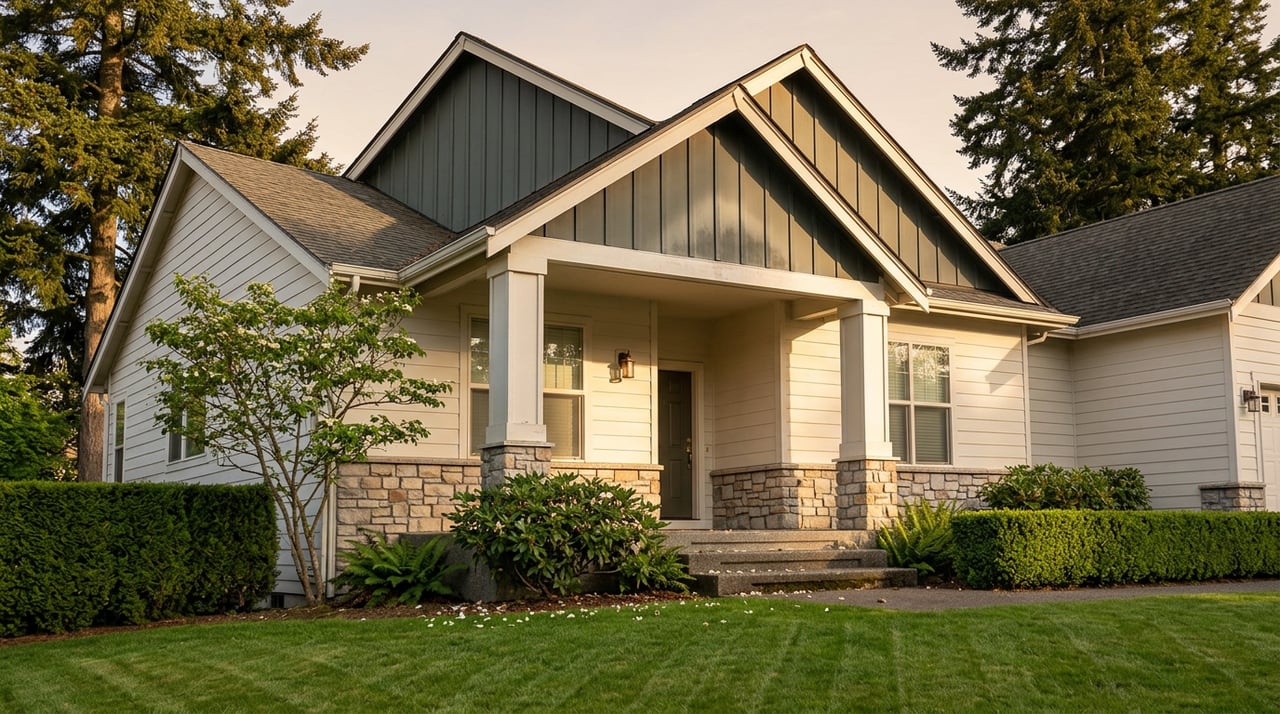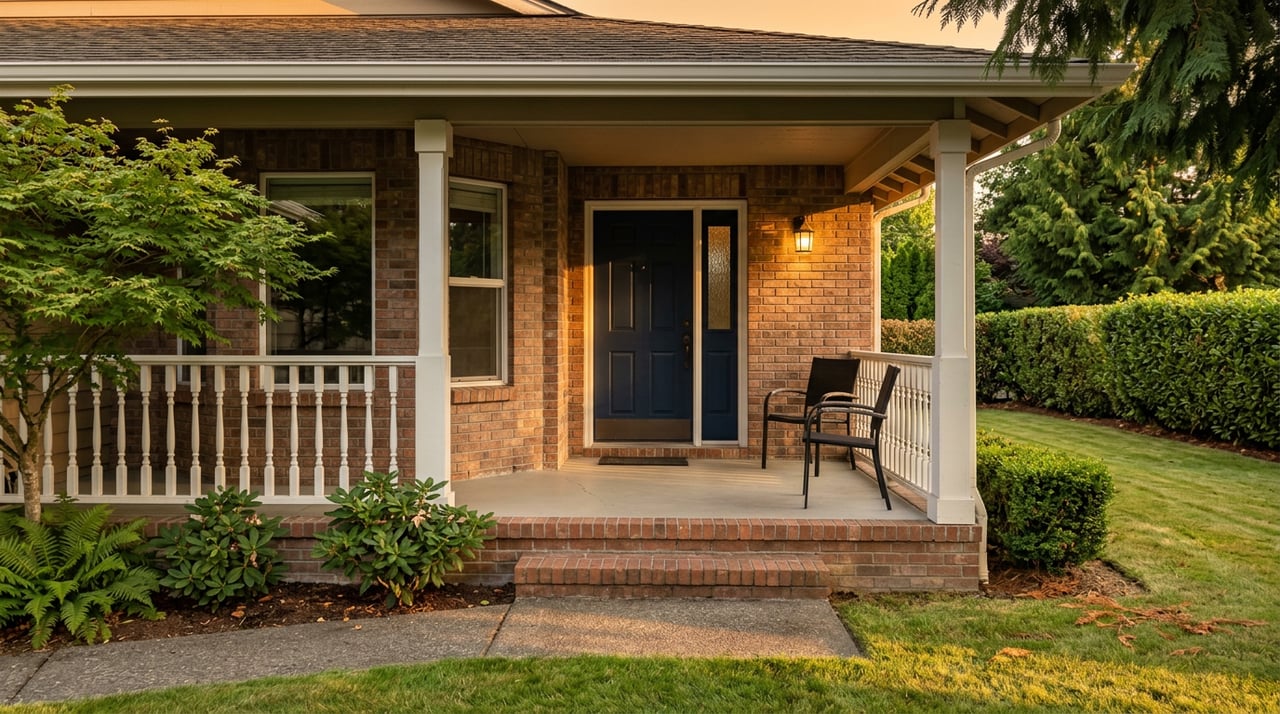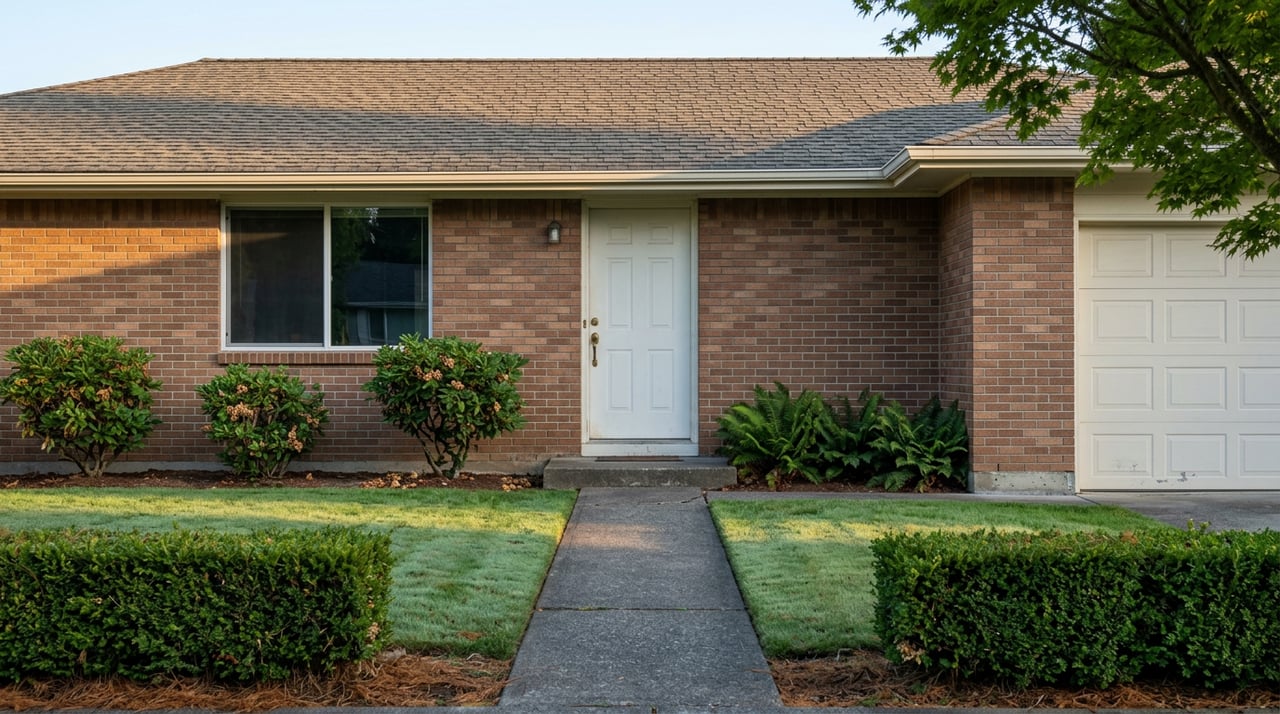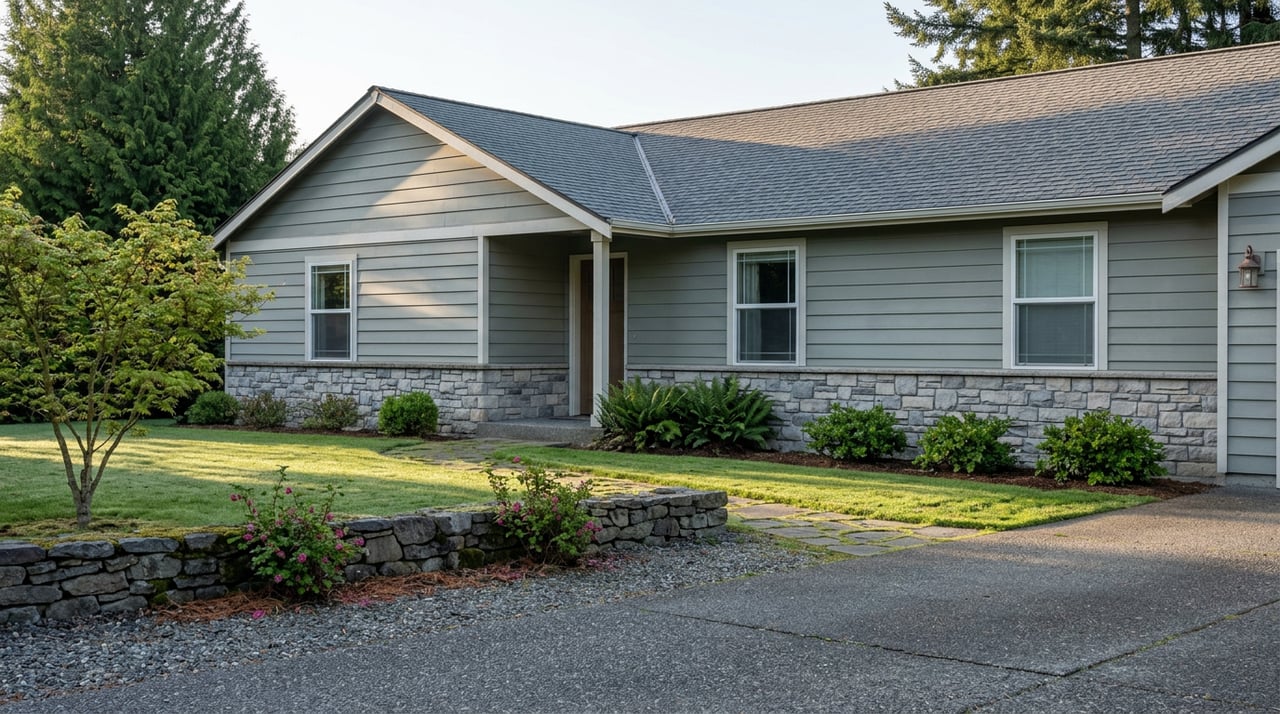
In January 2024, a farmhouse on the historic Samuel Libbey Ranch, part of the Sierra development outside Coupeville, went up for sale and then came right back off it. The house had a buyer lined up. What stopped the deal wasn't financing or an inspection. It was a metal roof, a rebuilt deck, and two new dormers, all installed before anyone applied for the one approval the property actually required.
The owners, Ian and Julie Olsen, hadn't skipped a step out of carelessness. Most buyers moving to Coupeville have never heard of the approval in question, because it isn't a home inspection item, a title issue, or anything a standard purchase and sale agreement flags. It's a design review requirement tied to where the house sits, not what condition it's in. And it applies to nearly every property in town, whether the buyer knows it or not.
That gap between what the market data shows and what the transaction actually requires is the reason this post exists. If you've been comparing Whidbey Island submarkets and noticed that Central Whidbey, the area that includes Coupeville, is currently showing the most buyer-favorable numbers on the island, you're reading the data correctly. You're just not reading all of it.
The number that looks like good news
Northwest Multiple Listing Service figures for July 2026 put Central Whidbey's inventory at 5.9 months, the loosest of Whidbey's three submarkets and the closest to genuinely buyer-favorable territory. Active listings in the area climbed from 53 to 80 over the year, while closings held flat at 14. South Whidbey, by comparison, saw active listings fall from 154 to 140 with closings rising from 25 to 38, a tighter squeeze despite more total transactions. Islandwide, the median closed price still rose from $602,000 to $635,000 over the same twelve months, so more choice in Central Whidbey hasn't come with falling prices. It's come with more time to think before writing an offer.
That's a real signal, and it matters if you're cross-shopping Coupeville against Oak Harbor or the South End. But months of inventory measures how fast homes are selling. It says nothing about what happens after you own one, and in Coupeville, what happens after you own one is where the friction actually lives.
Why almost every Coupeville property carries the same overlay
The Town of Coupeville sits entirely inside the Ebey's Landing National Historical Reserve, a federal, state, and local partnership established in 1978 to protect the area's farmland, shoreline, and historic settlement record. The reserve isn't limited to the handful of Victorian homes along Front Street. County planning documents describe it as covering all of the Town of Coupeville along with much of the surrounding forested land and farmland near Penn Cove, an area that older reporting from the Whidbey News-Times put at roughly 17,000 acres. If you're buying a cottage two blocks from the wharf or forty acres of pasture south of town, there's a strong chance both fall inside the same boundary.
Because the reserve predates most current listings by decades, it doesn't show up as a line item on a listing sheet the way square footage or lot size does. It surfaces later, when a buyer wants to reroof, add a dormer, build a fence, or put up a new structure on raw land.
The review process, and the disclosure the county actually requires
Most development inside the reserve is reviewed against a unified set of design guidelines adopted jointly by the Coupeville Town Council and the Island County Board of Commissioners. That review runs through a three-tiered Certificate of Appropriateness process, with the tier depending on how complex the project is. A repainting job and a new addition don't move through the same track, but both are expected to move through some track before work starts, not after.
Because this affects real property rights, Island County codified a specific seller obligation around it. Under Ordinance C-84-11, codified as ICC 17.04A.200, sellers and landlords of property within Ebey's Landing National Historical Reserve are required to give prospective buyers and tenants notice about the reserve's design requirements. It's a disclosure obligation similar in spirit to the geohazard and airport noise disclosures Island County also requires, but far more common in practice here, since it applies to nearly every property in Coupeville rather than a subset near a fault line or flight path.
That disclosure typically lands in the middle of a stack of closing paperwork, easy to sign without absorbing what it means. The Libbey Ranch case shows what it means when nobody reads it closely enough.
What actually happened at Samuel Libbey Ranch
The farmhouse in question is a contributing historic structure inside the reserve, which put it squarely under the Historic Preservation Commission's review authority. After the Olsens completed the roof, deck, and dormer work, the commission was asked to consider an after-the-fact Certificate of Appropriateness, essentially approval requested once the project was already built rather than before. Reserve Manager Marie Shimada described the situation plainly, calling it "kind of this uncomfortable gray space in the permitting process."
That gray space had a real cost. Word of the unpermitted changes spread locally before the review even happened, the Olsens found themselves managing more of the house than they'd planned for, and they listed it for sale. Then, with a buyer close to a decision, they pulled it back off the market and kept it. The property never changed hands, but the episode shows exactly how a design review question can insert itself into a live transaction on either side, buyer or seller, at almost any stage.
What this means if you're comparing Coupeville to the rest of the island
None of this makes Coupeville a bad place to buy. It makes the 5.9 months of inventory an incomplete answer to the wrong question. The real question isn't just how much competition you'll face for a listing. It's how much runway you'll need after closing if your plans include anything more than moving in as-is.
That distinction matters differently depending on what you're shopping for:
- If you're a second-home or lifestyle buyer eyeing a historic cottage near downtown, budget review time into any exterior renovation before you close, not after you've already picked out materials.
- If you're evaluating farmland or a larger parcel near Penn Cove for a small build or subdivision, confirm early with Island County Planning or the reserve's Trust Board, a partnership between the Town of Coupeville, Island County, Washington State Parks, and the National Park Service, whether your intended use triggers design review before you finalize a purchase price based on buildability.
- If you're buying a straightforward move-in-ready home with no renovation plans, the reserve may never come up in a meaningful way beyond the disclosure itself. The friction is mostly latent until you touch the exterior.
The loose inventory numbers still favor buyers on price negotiation and timeline. They just don't tell you anything about the approval process waiting on the other side of a signed offer.
A few questions we hear
Does the design review requirement apply outside Coupeville's town limits? Yes. The reserve extends into the surrounding farmland and forested land near Penn Cove, so a parcel outside the town boundary can still fall under the same design guidelines that apply downtown.
Does interior remodeling trigger the same review? The guidelines are generally focused on exterior features, site design, and new construction. Interior work that doesn't change exterior appearance falls outside the scope described in the town's own planning materials, though any project that touches the outside of a contributing structure is worth checking before you start.
Is this the same as a standard historic district designation? It overlaps with one. Coupeville also sits within the nationally listed Central Whidbey Island Historic District, and both frameworks are designed to work together rather than as separate hurdles.
Buying in Coupeville means buying into a place that has protected its shoreline, its farmland, and its working waterfront for nearly fifty years. That protection is part of what makes the town worth the drive up island in the first place. It just deserves the same attention as the price and the inventory count, not less.
If you're weighing a purchase in Coupeville, Oak Harbor, or anywhere else on Whidbey Island, Better Homes & Gardens McKenzie Realty can walk through what a specific property's history actually requires before you write an offer. Let Us Bring You Home.